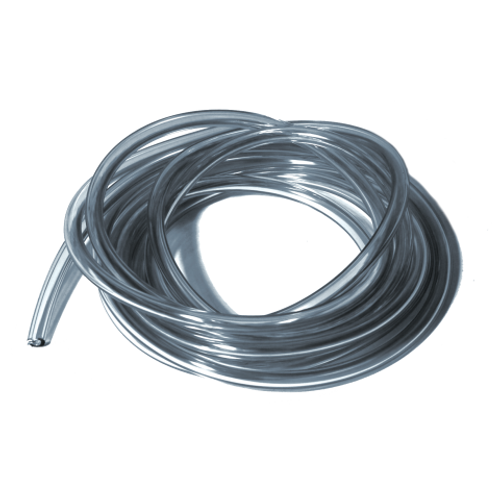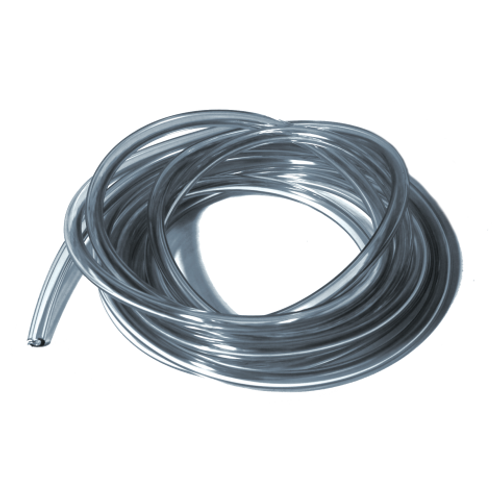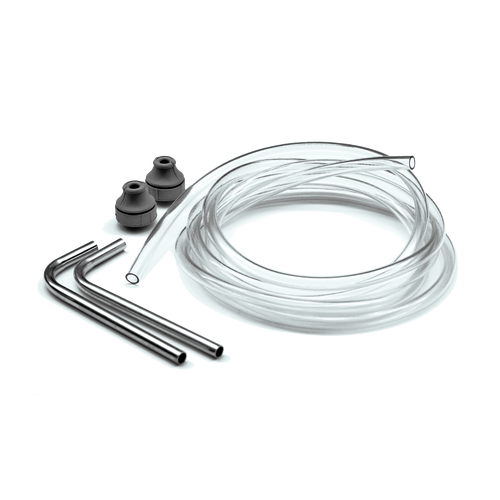


The ACI A/20' TUBE is a 20 ft (6.10 m) length of medical-grade flexible PVC tubing — the standard tubing used to connect ACI pickup ports and pitot tubes to their associated differential pressure transmitters, switches, and gauges. 0.17 in (4.32 mm) ID and 1/4 in (6.35 mm) OD, clear color for visual inspection of the tubing interior, FDA-compliant per relevant sections of Title 21 of the Code of Federal Regulations.
Compatible with all ACI pickup ports (A/O-PUP-H/V outdoor, A/R-PUP / A/R2-PUP room, A/SP-PUP stainless wall plate), the full ACI pitot tube lineup (SPT static, VPT velocity, PT plastic VAV, A/PT-DLP), and any pressure transmitter, switch, or gauge that accepts 3/16 in barbed or push-on fittings. Used with the MLP2, DLP, DBL, and PUP Series ACI pressure transmitters, and equivalent low-DP transmitters from other manufacturers. For best results, keep the tubing run as short as practical to minimize response time and avoid sharp bends or low points where condensation can collect.
Connecting ACI (and compatible) pickup ports, pitot tubes, and other pneumatic pressure accessories to low-DP differential pressure transmitters, switches, and gauges — the standard tubing used throughout HVAC and BAS pressure-monitoring systems. Suitable for indoor use; for outdoor portions of a run, route the tubing inside conduit to protect from UV and physical damage.
Key Features
Continuous 20 ft length — useful for typical room-to-mechanical-room runs in commercial buildings. Trim to length at installation with a sharp knife or tubing cutter.
Medical-grade flexible PVC formulation — the same material specification used in medical IV tubing and food-contact applications. Compliant with relevant sections of FDA Title 21 Code of Federal Regulations. Self-extinguishing flammability rating. Stays flexible at lower temperatures than industrial PVC variants.
0.17 in (4.32 mm) ID and 1/4 in (6.35 mm) OD — fits all 3/16 in (4.76 mm) barbed or push-on style fittings on ACI pickup ports and pitot tubes, plus all compatible-manufacturer pressure transmitters, switches, and gauges. The small inside diameter minimizes the response-time delay of the pneumatic signal.
Clear PVC color allows the installer to visually inspect the tubing interior for dirt, dust, condensation, or other contaminants that would degrade pressure reading accuracy. RoHS2, WEEE, and REACH compliant.
Technical Specifications
| Specification | Value |
|---|---|
| SKU | A/20' TUBE |
| Series | Medical-Grade Tubing Kit |
| Fitting Size Accepted | 3/16 in (4.76 mm) |
| Tubing Color | Clear |
| Tubing Material | Medical-Grade Flexible PVC |
| Material Flammability Rating | Self-Extinguishing |
| Inside Diameter | 0.17 in (4.32 mm) |
| Outside Diameter | 1/4 in (6.35 mm) |
| Length | 20 ft (6.10 m) |
| Weight | 0.50 lb (0.226 kg) |
| Maximum Operating Pressure | 39 psi maximum @ 70 deg F (21.1 deg C) |
| Operating Temperature Range | 35 to 122 deg F (2 to 50 deg C) |
| Storage Temperature Range | 0 to 122 deg F (-18 to 50 deg C) |
| Brittleness Temperature | -47.2 deg F (-44 deg C) |
| Agency Approvals | Complies with relevant section Title 21 of the Code of Fed. Reg., RoHS2, WEEE, REACH |
| Warranty | 5-year ACI Limited Warranty (Pickup Port Series) |
What’s In the Box
- 20 ft (6.10 m) length of medical-grade flexible PVC tubing (0.17 in ID x 1/4 in OD, clear)
Recommended Companion Products
Compatible ACI pickup ports (outdoor, room, and stainless wall plate). All accept 3/16 in tubing fittings:
Compatible ACI pitot tube families (static aluminum, velocity aluminum, plastic VAV):
Same medical-grade tubing in different lengths:
Documentation
Frequently Asked Questions
The A/20' TUBE is a 20 ft length of medical-grade flexible PVC tubing — the standard tubing used to route pneumatic pressure signals between ACI pickup ports / pitot tubes and a differential pressure transmitter, switch, or gauge. The tubing has a 0.17 in (4.32 mm) ID and 1/4 in (6.35 mm) OD, fitting all 3/16 in barbed or push-on style fittings used on ACI pneumatic accessories (and equivalent third-party manufacturers').
Order the length that covers your run from the pickup port / pitot tube to the transmitter with a small margin for routing. Shorter is better for response time — long runs increase the time it takes for a pressure change at the sensing tip to register at the transmitter, which slows control response. Avoid excess slack (which can develop sharp bends or condensation traps). Available lengths: 10 ft (rooftop-to-mechanical-room runs), 20 ft (typical room-to-controller), 50 ft (larger buildings), 100 ft (facility stock or extensive installations).
No — this is medical-grade flexible PVC compliant with the relevant section of FDA Title 21 of the Code of Federal Regulations. It stays flexible at lower temperatures (brittleness temperature -47.2 deg F vs. ~32 deg F for typical industrial PVC), uses a formulation with predictable long-term properties for pneumatic signal applications, and is rated self-extinguishing for fire safety. Standard hardware-store vinyl tubing often becomes stiff or brittle in cool spaces and may use formulations that off-gas or change dimensions over time — both bad for pneumatic accuracy.
39 psi maximum operating pressure at 70 deg F (21.1 deg C). For typical low-DP HVAC applications (pickup ports, pitot tubes, building static pressure measurement) the actual operating pressure is a fraction of a psi — well below the tubing's rating. The 39 psi limit becomes relevant only if the tubing is exposed to potential overpressure events such as accidental connection to a higher-pressure source.
The tubing itself is rated for 35 to 122 deg F operating temperature, which means it can be exposed to outdoor temperatures in most climates. However, direct UV exposure will degrade flexible PVC over time. For outdoor portions of a run (rooftop pickup ports, exterior conduit runs), route the tubing inside conduit — this is the standard installation practice and is documented in the ACI outdoor pickup port install manual.
Yes — trim with a sharp utility knife, tubing cutter, or single-edge razor for a clean perpendicular cut. The cut end pushes onto barbed fittings without any prep beyond the clean cut. Avoid scissors which can crush or distort the cut end and compromise the fitting seal.